Nvidia Unveils the RTX Pro 5500 Workstation GPU Featuring a Massive 84GB GDDR7 Memory Pool for Enterprise Computing

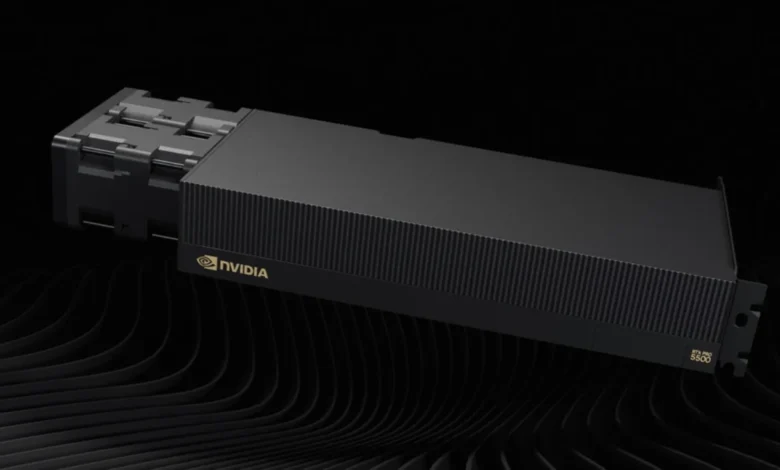
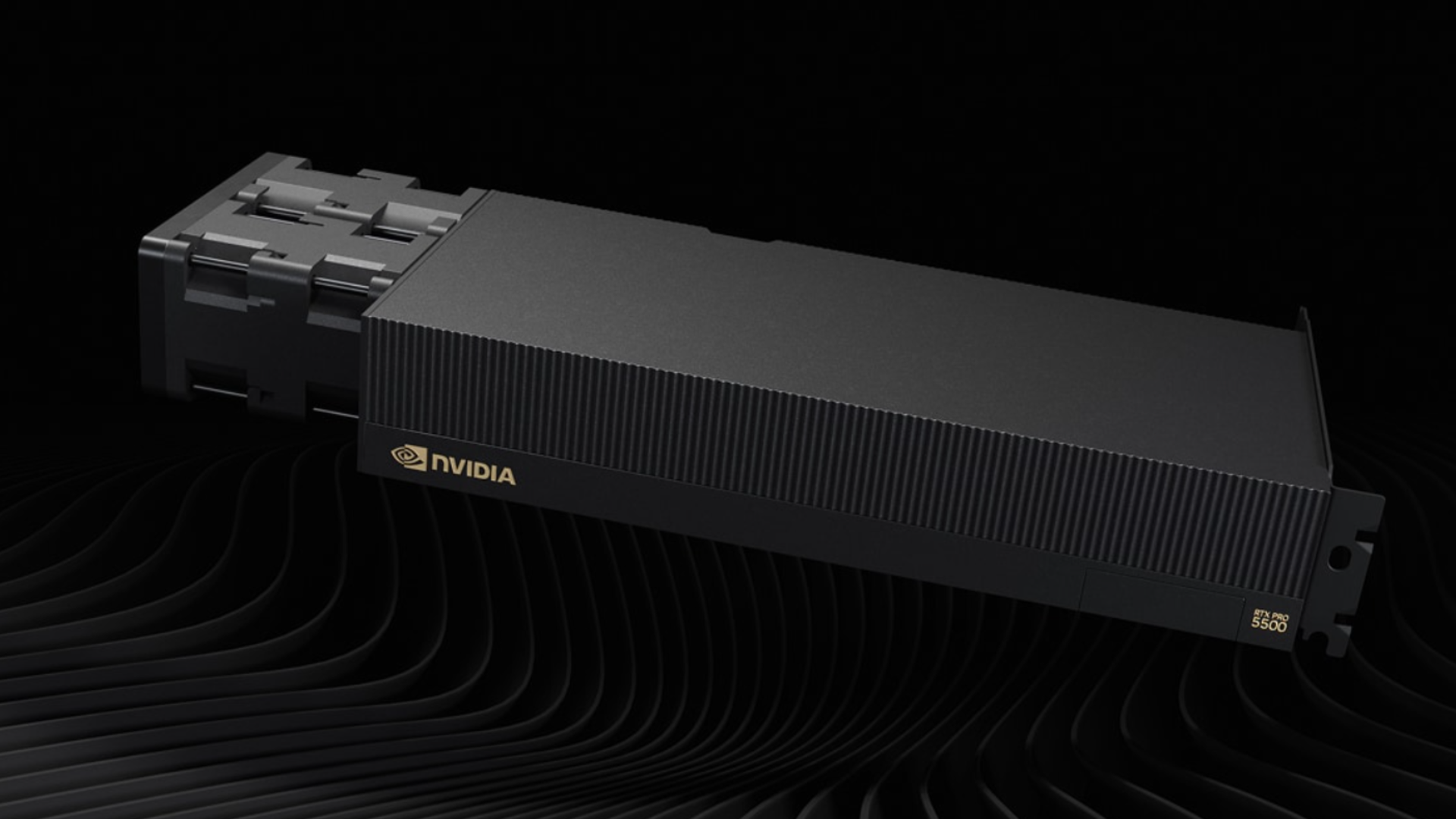
Nvidia has officially expanded its professional-grade graphics lineup with the introduction of the RTX Pro 5500, a workstation-class GPU engineered to address the growing demand for high-capacity local memory in enterprise AI and rendering environments. Built upon Nvidia’s cutting-edge Blackwell architecture, the card distinguishes itself with a staggering 84GB of GDDR7 memory, a configuration designed to handle massive datasets that would typically require multi-GPU setups. While the consumer market remains focused on gaming performance, the RTX Pro 5500 is positioned firmly as a workhorse for data scientists, creative professionals, and engineers tasked with training large language models (LLMs) and complex 3D simulation workloads.
The technical architecture of the RTX Pro 5500 is rooted in the GB202 processor, which boasts 21,760 CUDA cores—the same core count utilized in the flagship GeForce RTX 5090. However, unlike its consumer-oriented counterparts, the Pro 5500 is purpose-built for the constraints and requirements of server-grade environments. By opting for an 84GB memory buffer, Nvidia is providing an alternative for professional workflows that sit between the standard workstation offerings and the ultra-high-end H100 or Blackwell-based data center accelerators.
The Engineering Challenge: A Sandwich Configuration
Packing 84GB of high-speed GDDR7 memory onto a single PCIe-based card presented significant thermal and physical design challenges for Nvidia’s engineering team. To achieve this density, the company utilized a double-sided "sandwich" layout. The circuit board is populated with 14 GDDR7 memory modules on the front side, surrounding the core processor, with an additional 14 modules mirrored on the rear of the PCB. This arrangement allows for a total of 28 modules to be squeezed into a compact form factor that adheres to standard rack-mount dimensions.
Each of these memory chips operates at a speed of approximately 27 Gbps per pin. While this is a baseline performance metric for the current generation of GDDR7 technology, the sheer number of chips results in a 416-bit memory interface. This specific bus width is an anomaly in modern GPU design, which traditionally favors power-of-two configurations like 256, 384, or 512-bit interfaces. The 416-bit path implies the use of 13 separate 32-bit memory channels, a design choice that reflects Nvidia’s priority on memory capacity over traditional, perfectly symmetrical bandwidth scaling. The resulting aggregate bandwidth of 1,398 GB/s is substantial, though it represents a calculated trade-off to accommodate the massive 84GB memory footprint.
Market Positioning and Professional Utility
The introduction of the RTX Pro 5500 follows a logical progression in Nvidia’s product roadmap, which has increasingly bifurcated into consumer gaming and professional enterprise sectors. Historically, the workstation market relied on cards like the RTX Pro 6000—the current flagship—which offers 96GB of VRAM and 24,064 CUDA cores. The RTX Pro 5500 effectively bridges the gap between the mid-range RTX Pro 5000, which is capped at 72GB of memory and 14,080 cores, and the top-tier solutions.
By situating the Pro 5500 closer to the flagship specification, Nvidia is signaling to the market that it intends to capture the segment of enterprise customers who require "near-flagship" performance without the full cost associated with the absolute top-of-the-line hardware. This strategy is particularly relevant in the context of the current AI boom, where the ability to keep larger portions of a model or a dataset within a single GPU’s memory is paramount to performance. The inclusion of multi-instance partitioning—allowing the card to be split into two discrete 42GB segments—further enhances its utility for virtualized enterprise environments, enabling multiple users or processes to run simultaneously on a single piece of hardware.
Thermal Management and Power Requirements
Given the power density required to drive a high-core-count GB202 processor and 28 GDDR7 memory modules, the RTX Pro 5500 is rated for a 600W thermal design power (TDP). This wattage is significantly higher than typical desktop graphics cards, necessitating a shift in deployment strategy. Nvidia has explicitly designed this card for rack-mounted server chassis, where high-static-pressure airflow can be managed more effectively than in a traditional tower.
The card will be available in both air-cooled and liquid-cooled configurations. The air-cooled variant utilizes high-RPM server-grade fans that are bolted directly to a heavy-duty heatsink. This design ensures that the card can maintain stable performance under sustained 100% load, which is a requirement for professional rendering and simulation tasks that can last for days at a time. The liquid-cooled version, meanwhile, is designed for high-density server racks where thermal dissipation must be exhausted away from the card’s immediate vicinity to prevent ambient heat soak.
Strategic Implications for the Enterprise Sector
Industry analysts view the release of the RTX Pro 5500 as a direct response to the democratization of AI development. As more mid-sized enterprises move away from cloud-only AI infrastructure to on-premises "private AI" clusters, the demand for hardware that can run inference and light training locally has skyrocketed. The 84GB memory pool is a "sweet spot" for many LLM deployments; it is sufficient to hold complex models that would otherwise crash on standard 24GB or 48GB consumer-grade hardware.
Furthermore, the decision to use GDDR7, while keeping the speed at a moderate 27 Gbps, suggests that Nvidia is focusing on the reliability and signal integrity of the memory bus. In enterprise applications, memory errors caused by extreme overclocking or pushing memory clocks to the absolute limit can lead to catastrophic data corruption during long-running computations. By maintaining "routine" GDDR7 speeds, Nvidia is prioritizing stability and data integrity, features that are far more valuable to an enterprise client than the raw frame-rate gains sought by gamers.
Future Outlook and Availability
While Nvidia has yet to announce a specific release date or a finalized MSRP, industry insiders anticipate that the card will command a premium price consistent with its "Pro" branding and its placement in the workstation hierarchy. The target market is not the enthusiast or professional gamer, but rather system integrators, academic research institutions, and large corporations with dedicated IT infrastructure teams.
Looking forward, the RTX Pro 5500 sets a new benchmark for how professional GPUs are configured. The move toward unconventional memory widths and sandwich-style PCB designs demonstrates a shift in priority toward capacity-first architecture. As the industry continues to push toward larger models and more complex real-time simulation, the ability to pack more VRAM onto a single PCIe slot will likely become the primary metric by which workstation GPUs are judged.
Nvidia’s move to expand its Blackwell-based professional lineup so quickly after the introduction of its consumer-facing 50-series chips highlights the company’s intent to dominate every facet of the computing market. Whether the RTX Pro 5500 becomes the new standard for mid-to-high-tier workstation performance will depend on the real-world adoption rates of its unique 84GB memory architecture and the software optimization of professional suites to take advantage of its specific multi-partitioning capabilities. As companies continue to navigate the complexities of AI integration, hardware solutions like the Pro 5500 provide the necessary, if specialized, tools to remain competitive in an increasingly data-intensive world.